
7 Myths About Groundwork
Groundwork is a versatile part of horse training and is practiced in many different ways. Yet its potential is often underestimated, as it is frequently associated primarily with individual exercises like lunging or leading the horse on a rope. In reality, groundwork encompasses a wide range of methods and training approaches. It can help improve communication, coordination, and cooperation between horse and human, and offers horses of different ages and training levels numerous opportunities for physical and mental engagement. In this article, we dispel some of the most common myths about groundwork.
Myth 1: Groundwork is just lunging
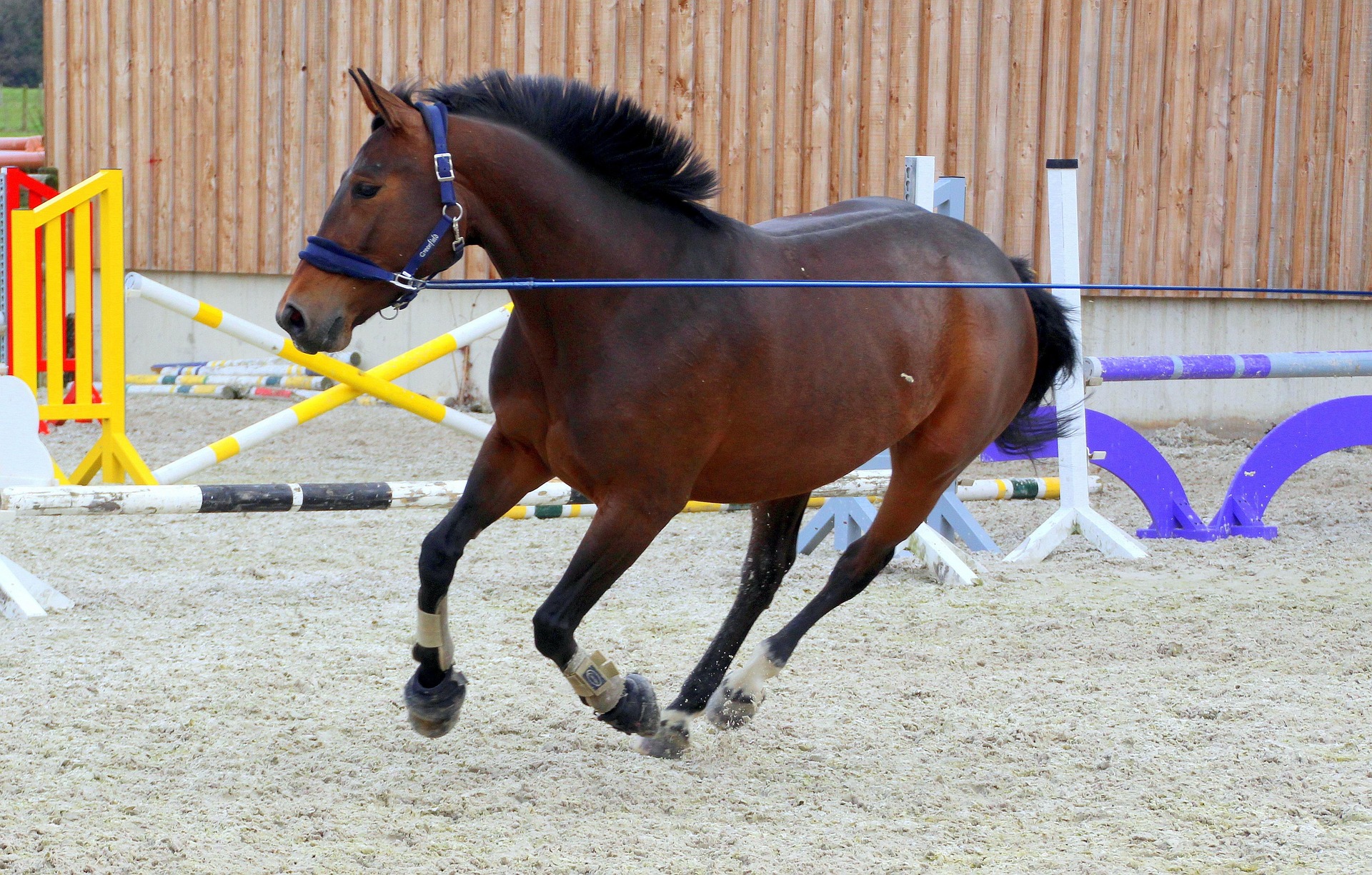
Many people associate groundwork only with circles on the lunge line. In reality, it is far more diverse, and health-oriented lunging goes well beyond simply moving the horse in circles: when done correctly, it is a complex and valuable form of training. From simple transitions to pole work and more advanced exercises, lunging offers numerous ways to vary training and develop both horse and handler.
Myth 2: Groundwork is boring
Groundwork can be engaging, creative, and varied. It improves concentration, balance, and communication between horse and human. It includes all disciplines and methods that can be performed from the ground. Such as single or double lunge work, classical handwork, concepts like Parelli’s Seven Games, Tellington Training, clicker and medical training, horse agility, horse enrichment with color and scent exercises, liberty work, circus tricks, and much more. Body-focused approaches such as massage techniques, body wraps, proprioceptive exercises on unstable surfaces like wobble boards or balance pads, as well as newer methods like fascial training, are also included. This wide range of options can be combined in many ways, continually offering new training opportunities for both horse and handler.
Myth 3: Liberty work = 100% trust from the horse
Liberty work is often seen as a sign of exceptionally high trust between horse and handler. It can reflect a good relationship and effective communication, but it does not necessarily guarantee it. Ideally, liberty work arises from clear communication, collaborative partnership, and mutual trust.
Like any training method, liberty work is based on learned patterns and repeated practice. Many horses perform impressive exercises and routines that appear highly harmonious to observers. At the same time, different training approaches may be used behind the scenes that unfortunately do not reflect the harmonious image seen during performances. The key is that training is understandable, structured, and appropriate for the horse, based on clear communication and step-by-step learning.
Myth 4: You always have to be the «boss»
Groundwork is not about dominance or power, but about clear communication through appropriate body language and mutual trust. Good timing, clear cues, and consistent yet respectful training are essential.
Horses should be actively involved in the training process, learning to think and cooperate rather than just follow commands. Their personality remains intact: strengths can be encouraged and areas for development addressed. This is achieved not through pressure or fear, but through understandable instructions, appropriate reinforcement, and consistent practice.
Myth 5: Groundwork is only for young horses
All types of horses, at any stage of life, can benefit from groundwork. Young horses benefit particularly, as they are gradually prepared for life as a riding horse and introduced gently to work, cues, and various equipment. Older horses also benefit, whether as a complement to riding, for muscle development after illness, or to maintain fitness in later years. Groundwork also provides an excellent opportunity to mentally stimulate and engage the horse. In cases of acute or chronic health issues, a veterinarian should of course be consulted to determine which exercises are suitable and safe.
Myth 6: Groundwork isn’t real training
On the contrary: groundwork is highly effective training for balance, coordination, muscle development, and mental focus – it can be physically and mentally demanding. Many exercises from riding can be adapted for the ground, making sessions challenging. While the horse may not cover the same distances as under saddle, groundwork remains highly effective. It can also be demanding for humans, as many techniques require precise timing, coordination, and focus.
Myth 7: Groundwork is only for people who are afraid to ride
Groundwork is valuable for all horse enthusiasts – whether beginners, experienced riders, or professionals. It does not replace riding, but complements it and provides a solid foundation. For riders with fear, it offers a way to get to know the horse differently, build trust, and gradually regain confidence in the saddle. At the same time, some people are not interested in riding but are highly motivated and engaged in groundwork, or they own horses that, due to size or physical limitations, cannot be ridden. In all these cases, groundwork allows the horse to stay physically and mentally healthy while still benefiting from training.
Conclusion:
Groundwork is neither boring nor merely a “substitute” for riding. It is a valuable tool for improving communication, trust, and fitness. Those who use it regularly and creatively will continually discover new aspects and experience their horse from a completely different perspective. Fair training based on positive reinforcement, good timing, clear communication, patience, and respect is key to success.
Author: Lynn Kirsch http://www.soleiftri.com
Deja un comentario