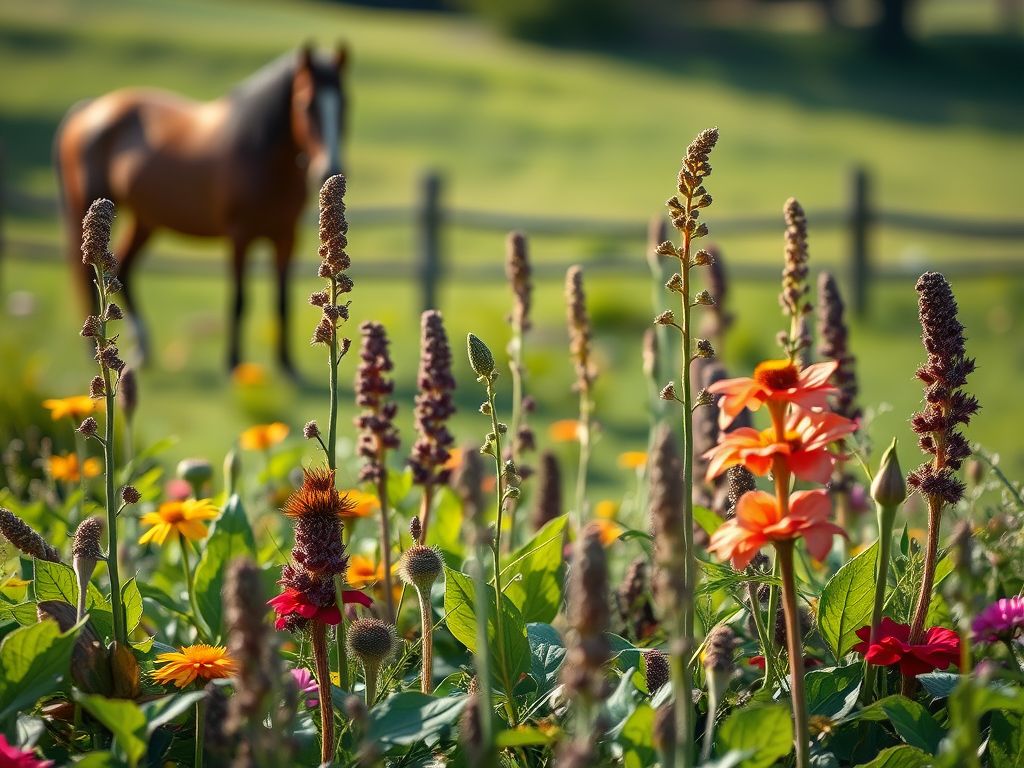
Horses often avoid poisonous plants in the pasture. However, this does not mean they automatically know what they are allowed to eat and what they should avoid. Curiosity, lack of forage, accidental ingestion through hay, or unintentional consumption can have serious consequences. Some plants contain toxins that can cause severe poisoning or even death, even in very small amounts.
1. Black Locust / False Acacia (Robinia pseudoacacia)

All parts of the black locust are highly toxic, except for the flowers. Even a few grams of bark can be fatal. The brown seed pods can be carried by the wind over long distances and may reach neighboring pastures. Additionally, the wood is often used for fences and stable constructions, which further increases the risk of ingestion.
2. Sycamore Maple and Box Elder (Acer spp.)

Both trees contain the toxin hypoglycin A, which can cause atypical myopathy—a severe muscle disease that is often fatal.
- Autumn: The fallen seeds are particularly dangerous and can spread over several kilometers by wind.
- Spring: The young seedlings are among the first green plants to grow in the pasture and are also highly toxic.
3. Meadow Saffron (Colchicum autumnale)

Meadow saffron is highly toxic to many animals and humans. Even small amounts of leaves, flowers, or seeds can be fatal. The toxin remains active in hay; however, once dried, horses can no longer recognize and sort out the poisonous plant. Therefore, regular monitoring of forage quality is essential.
Important: Even visually flawless feed may contain toxic plants.
4. Ragwort (Senecio jacobaea)

Ragwort contains alkaloids that can severely damage a horse’s health and may lead to death. Consistent pasture management is crucial, as this plant spreads rapidly if not controlled. It remains dangerous even when dried in hay; with chronic intake, symptoms of poisoning may only appear weeks or even months later.
5. Yew (Taxus baccata)

All parts of the plant are extremely toxic. Even small amounts can cause heart failure and sudden death. Yew trees should never be located near horse pastures or stables, and under no circumstances should yew branches be offered as browsing material.
6. Foxglove and Monkshood (Digitalis spp. & Aconitum spp.)

These plants contain highly potent substances that affect the heart and nervous system. Just a few leaves or flowers can cause severe poisoning or even death.
7. Poison Hemlock (Conium maculatum)

Poison hemlock is extremely toxic and can easily be confused with caraway or wild carrot. It can cause paralysis as well as respiratory and cardiac problems and is fatal even in small amounts.
8. Nightshade Family (Solanaceae)

The nightshade family includes plants such as deadly nightshade, bittersweet nightshade, and potato, which contain toxic alkaloids that can severely affect a horse’s health. These plants typically grow in shaded areas or along forest edges. All parts of the plant can be poisonous and potentially fatal.
Author: Lynn Kirsch http://www.soleiftri.com
Deja un comentario