
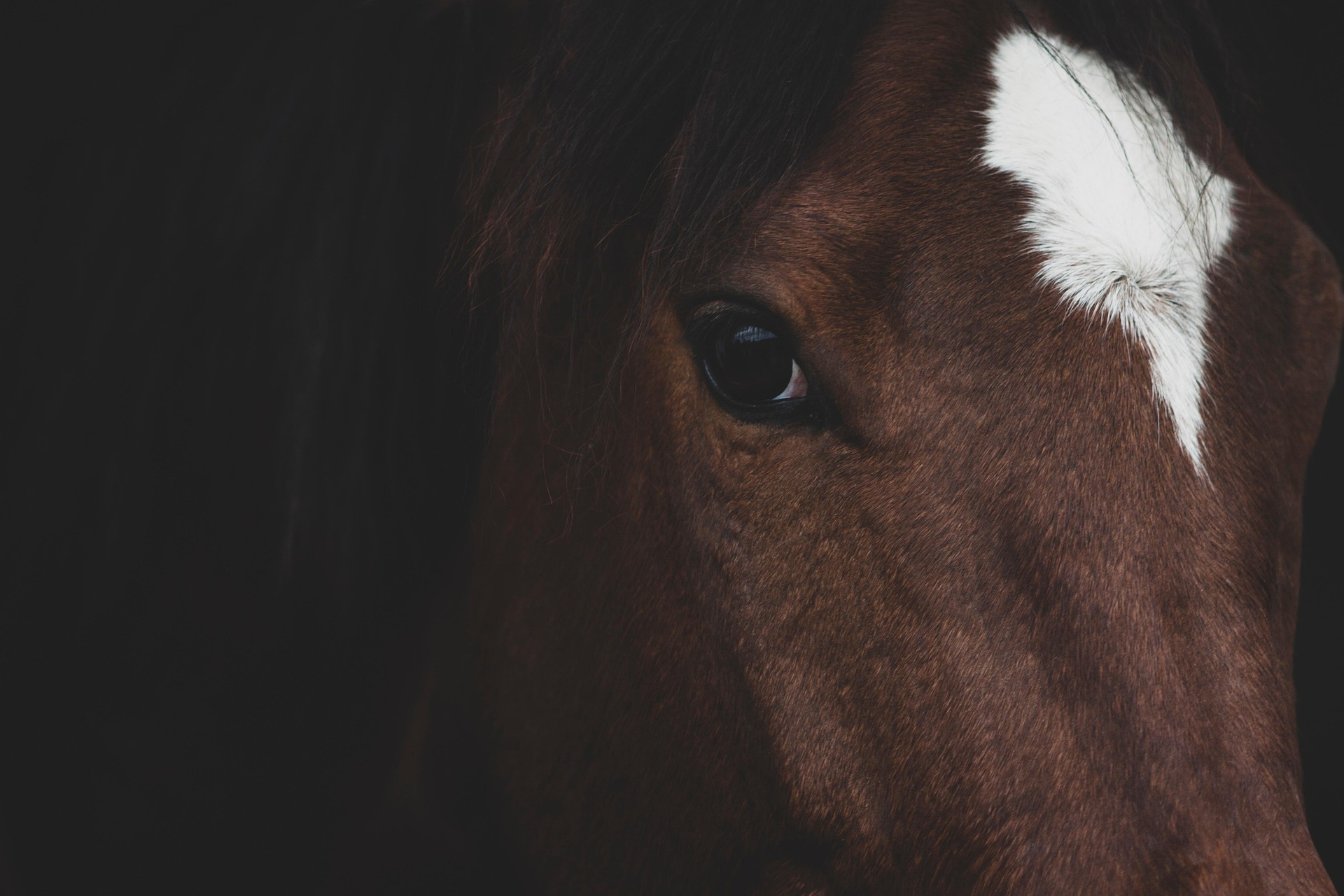
One head, one tail, four legs — it neighs and can be ridden. That is how many people would spontaneously describe a horse. Yet the horse is far more than just a riding animal. For thousands of years, it has accompanied humans as a working partner, friend, athlete, and symbol of freedom and strength. But what exactly is a horse? Where does it come from, how does it live, and what makes this fascinating species so unique?
The horse as a species
The domestic horse (Equus ferus caballus) belongs to the equine family (Equidae). Besides horses, this family also includes donkeys, zebras, and various hybrids such as mules and hinnies. Although these animals share certain similarities, they differ significantly in their behavior, communication, and needs. Therefore, this does not automatically mean they are suitable social companions for one another.
The horse is also classified as a single-toed ungulate. This means that, unlike cattle or deer, it has only one fully developed toe on each leg. This toe is protected by the hoof, which supports the horse’s entire body weight. The development of the hoof was an important evolutionary advantage, making the horse a fast, enduring, and highly adaptable running animal.
The horse as a flight and prey animal
By nature, horses are flight and prey animals. In the wild, they had to protect themselves from predators over thousands of years. As a result, their behavior is still strongly focused on detecting danger early and reacting quickly.
Horses are highly aware of their surroundings and often react sensitively to unfamiliar stimuli or sudden changes. Body language plays a particularly important role in this process: horses are extremely attentive to subtle signals in posture, muscle tension, and movement from other herd members or even humans. Even slight changes can trigger alertness or insecurity. This is supported by their highly developed senses and a body built for fast and enduring movement. These traits enabled horses to protect themselves effectively in nature, and they have retained these fundamental behavioral patterns to this day.
The horse as an animal of movement
Horses are naturally animals that require constant movement. In the wild, they travel around 20–30 kilometers per day, mainly in search of food and water. Most of this movement takes place at a walk with the head lowered. Their entire anatomy is designed to support regular and continuous movement. Consequently, sufficient exercise is also vital for domesticated horses and is a central component of their health.
For longer distances or purposeful relocation, horses use the trot, for example when searching for water sources. The gallop is primarily used in situations requiring rapid reactions, especially during escape behavior.
By nature, the horse carries approximately 60% of its body weight on the forehand. In free movement, this does not pose a problem, as the horse moves in balance and without additional load. In equestrian work, however, this weight distribution becomes particularly important. Horses are not naturally designed to be ridden, and the rider adds extra weight to an area that is already more heavily loaded.
If the horse consistently works on the forehand, fatigue of the supporting and locomotor system will develop in long term, with negative effects on health and long-term athletic durability. Therefore, a central goal of training is to develop posture and movement mechanics that allow the horse to carry both itself and the rider in a healthy and sustainable way. This should not be confused with the mistaken idea of “rounding up” the horse by manipulating the position of the head and neck through the reins or auxiliary reins, as this type of work also harms it.
Continuous grazers and selective feeders
Horses are continuous foragers. In the wild, they spend around 16 hours a day searching for food. Their digestive system is designed to process many small meals throughout the day. A horse’s stomach is relatively small and continuously produces gastric acid, regardless of whether food is present. Therefore, regular access to food at short intervals is especially important for digestive health, and long fasting periods (more than 4–6 hours) should be avoided.
At the same time, horses are selective eaters. They engage in what is known as “browsing,” deliberately choosing certain grasses, herbs, and plant parts while avoiding others. This ability to select food is part of their natural feeding behavior and helps them adapt to different feeding conditions in their environment. However, this does not imply that horses consistently recognize which plants are safe for them or that they automatically avoid poisonous plants.
The horse as a herd animal
Horses are also strongly social herd animals. In nature, they live in family groups that primarily provide safety and protection. Within the herd, each animal has a specific role shaped by age, experience, and social position. The focus is not on constant dominance fights but on maintaining a stable social balance in which unnecessary injuries are avoided, as these offer no advantage for the survival of the group.
The situation is different when unfamiliar horses meet, as this can lead to intense confrontations. Herd members may also be excluded or driven away if they no longer fit into the existing social structure.
In modern horse keeping, however, herds are often artificially assembled. These groupings are not formed through natural selection but through space limitations and human decisions. As a result, tensions, dominance conflicts, and unrest within the group may occur more frequently, especially when horses are housed together that would likely never have met or formed a group in the wild.
This makes careful herd management especially important. Stable groups should be maintained whenever possible, frequent changes should be avoided, and the social structure should not constantly be disrupted, since every change can affect the balance of the herd. It is equally important to ensure that lower-ranking horses have sufficient access to resources such as food, water, and resting areas. In some cases, adapting or dividing the group may be beneficial. A thoughtful and gradual integration of new horses is also crucial to avoid stress and injuries.
Ultimately, the herd has a major influence on the social, mental, and physical well-being of each individual horse. At the same time, an unsuitable group composition can lead to chronic stress and unrest, which is why careful observation and appropriate management are essential.
Author: Lynn Kirsch www.soleiftri.com
Deja un comentario