
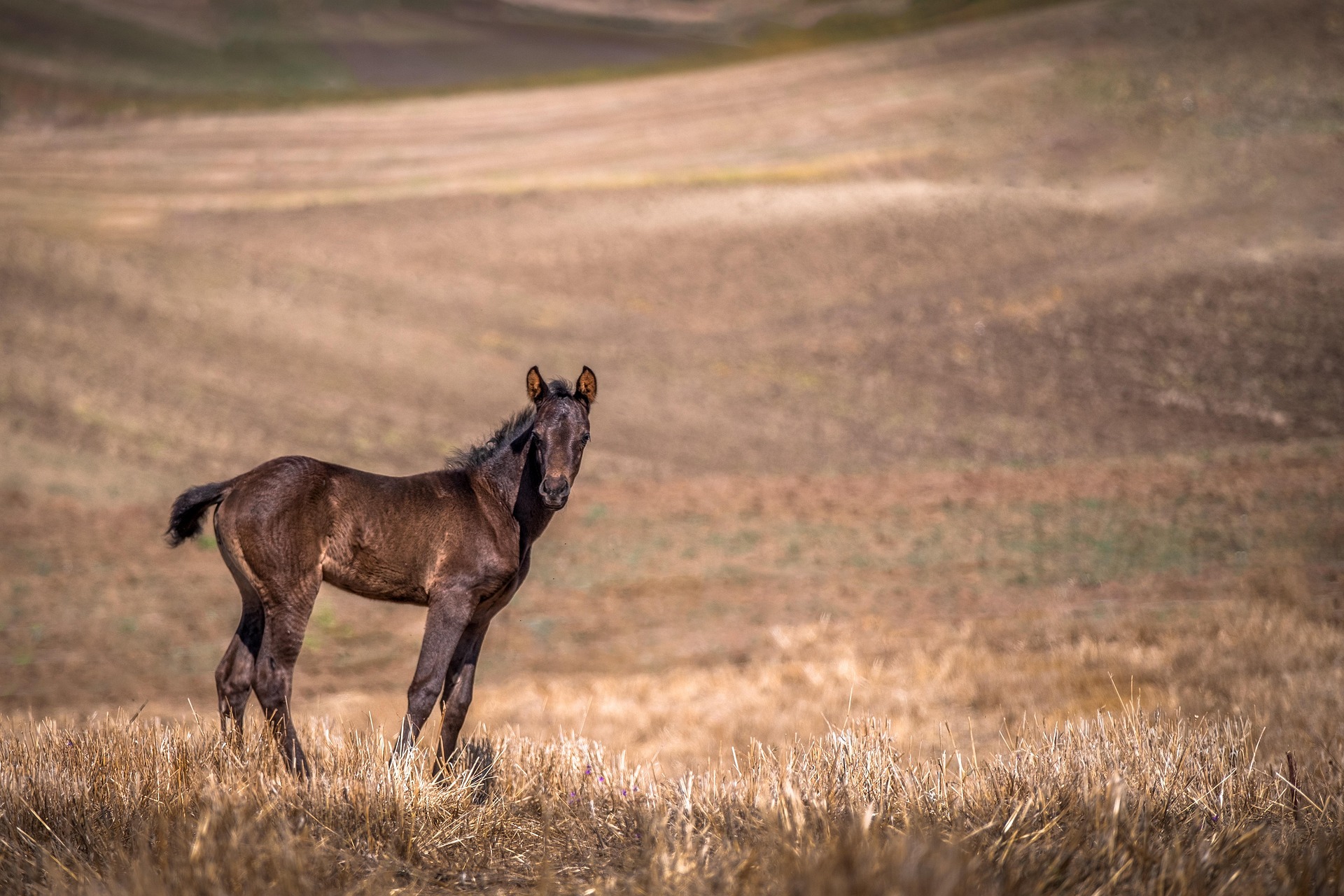
Horses fascinate us not only with their strength and sensitivity, but also with many remarkable features of their anatomy and evolutionary history. At first glance, some of these characteristics may seem unusual, yet each has a clear anatomical or evolutionary explanation.
1. Horses cannot vomit
Due to the unique connection between the esophagus and the stomach, vomiting is anatomically impossible for horses. A very strong sphincter at the entrance to the stomach prevents its contents from flowing back toward the mouth. From an evolutionary perspective, this structure makes sense, as horses naturally graze with their heads lowered, and reflux would be problematic. However, this same mechanism is also the reason why digestive disturbances or stomach overload can be particularly dangerous, as horses are unable to relieve the pressure themselves.
2. Horses do not have a collarbone
Their forelimbs are not attached to the torso by bone, but are suspended by muscles, tendons, and ligaments. This design allows for great freedom of movement and makes horses highly efficient runners. At the same time, improper or excessive training can lead to what is known as “support fatigue”: the supporting muscles tire, the chest drops, and the horse adopts compensatory postures throughout the body. This can result in tension, performance issues, and long-term damage.
3. Horses sleep both standing and lying down
Horses possess a specialized “stay apparatus” that allows them to doze while standing without actively engaging their muscles. They can cock one hind leg and “lock” their joints to relieve strain. However, for deep sleep (REM sleep), they must lie down flat or rest with their head supported in order to fully regenerate. Their main sleeping period typically occurs between 10:00 p.m. and 6:00 a.m. If REM sleep is consistently disrupted, a horse may develop pseudonarcolepsy and literally collapse from exhaustion.
4. Horses cannot breathe through their mouth
Horses are obligate nasal breathers and cannot breathe through their mouths. During swallowing, the larynx completely seals off the airway, temporarily interrupting airflow.
5. Every horse has it’s own voice
The pitch, tone, and intensity of a whinny are individual. Other horses can perceive these differences and recognize specific horses by their voices.
6. Horse remember human faces
Horses can recognize human faces and retain this memory over long periods. Studies show that horses can even identify people in photographs. They also possess a strong long-term memory and can remember positive as well as negative experiences with humans for years.
7. Chestnuts and ergot – Evolutionary remnants
The small horn-like growths on the inside of a horse’s legs, known as chestnuts, as well as the ergots found near the fetlocks, are rudimentary remnants of the toes of prehistoric horses. They clearly illustrate the evolutionary development of the species and are uniquely shaped in each individual.
Author: Lynn Kirsch http://www.soleiftri.com
Deja un comentario